
Tree work for Wichita & Sedgwick County
Tree Service in Wichita, KS
Removal, pruning, stump grinding and storm cleanup planned around Kansas wind, ice and the fast-growing trees that do well here.
- We come out and look before we price, anywhere in Wichita and Sedgwick County
- Each item on the estimate priced on its own
- We confirm where the wood goes before work begins
Trees That Grow Fast and Break in the Wind
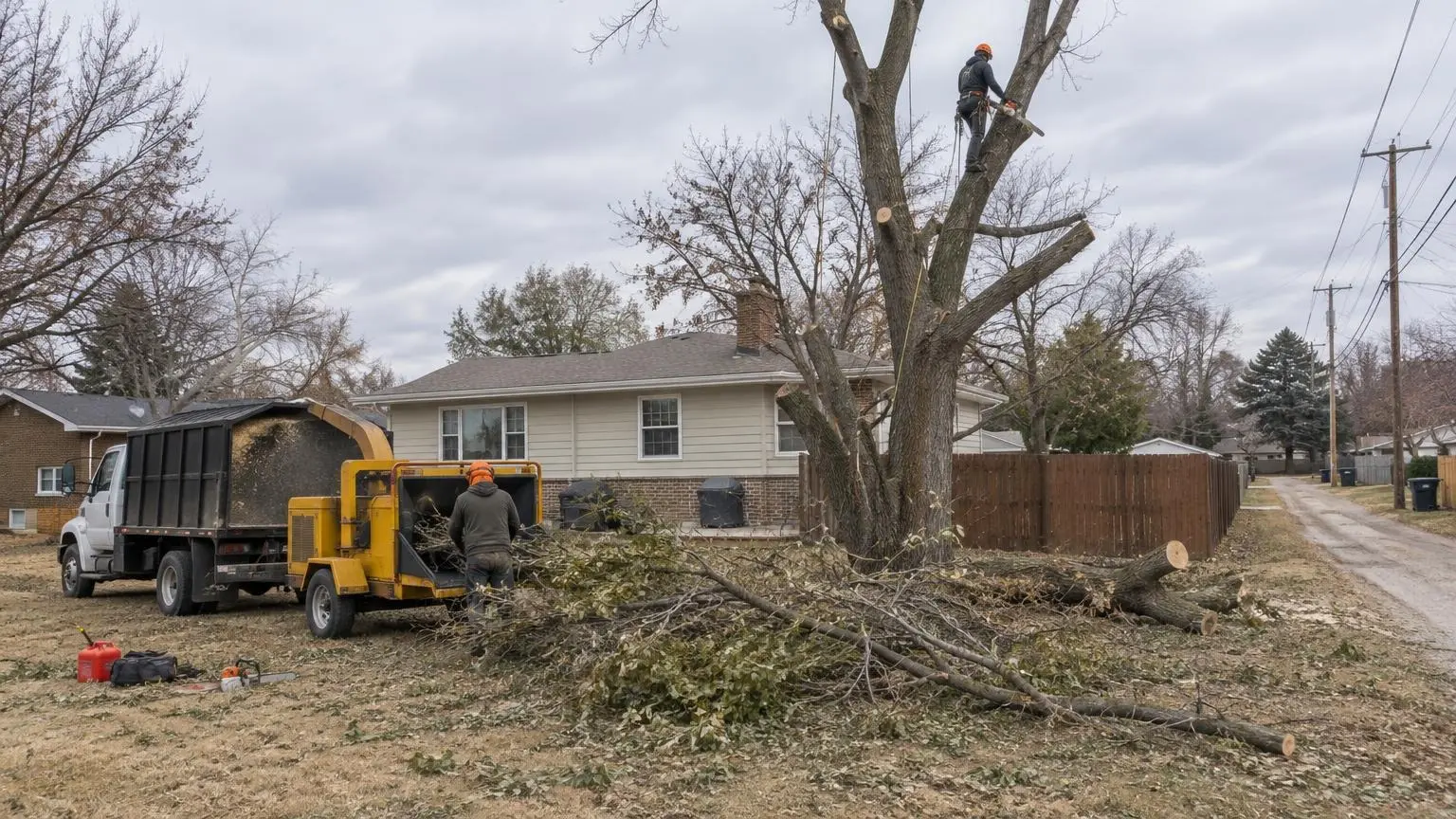
Tree service in Wichita is mostly about wind. The National Weather Service recorded a 102 mph gust at the Wichita airport on June 17, 2025, the strongest ever reported there, and its storm summary says tree damage was very extensive throughout much of the city, with about 85,000 people losing power. Spring and summer thunderstorms bring hail and straight-line winds most years, and ice storms add weight to bare limbs in winter. The trees that do well on the Arkansas River plain, like cottonwood, Siberian elm, hackberry and silver maple, grow quickly and get big, and big, fast-grown wood over a roof is where most of our calls start.
Wind, hail and ice
Wichita's weather does not let up on trees. Wikipedia's climate summary for the city lists frequent spring and summer thunderstorms with large hail, an average wind of about 13 mph, and roughly 65 days a year at 90 degrees or hotter. The NWS Wichita office has written up ice storms in 2005, 2007, 2013, 2015, 2017, 2019 and 2020, and the January 2005 storm, which the office calls the costliest ice storm in Kansas history, left more than 50,000 people in Sedgwick County without power. Long limbs reaching over a house, forks with bark pinched between two stems, and trees with old decay are the ones that fail first. Shortening and thinning them before storm season is cheaper than cleaning up after.
Soil and water
K-State's Sedgwick County Extension office describes local soils as anything from sandy to heavy clay, usually alkaline with a pH of 7.2 or higher, with about 30 inches of rain a year and summer highs that have reached 111 degrees. On alkaline soil, trees such as pin oak and silver maple often show iron chlorosis: pale, yellow leaves with green veins. Clay that stays wet after heavy rain and dry, cracked ground in August both stress roots, and stressed trees are the ones that drop limbs and draw insects.
Pines in decline
Pine wilt is the reason many Wichita-area pines are dying. K-State Research and Extension says Scots pine is the species most seriously affected in Kansas, Austrian pine is also hit, and infected trees usually die within about three months. The needles turn gray-green, then yellow and brown, but stay on the tree. The recommended control is to remove infected trees to ground level and burn, bury or chip the wood before April 1, before the beetles that carry the disease come out in spring. We treat a browning pine as a job with a deadline.
Ash trees and emerald ash borer
As of the Kansas Department of Agriculture's current list, emerald ash borer has been confirmed in northeast Kansas counties such as Wyandotte, Johnson, Douglas and Shawnee, and Sedgwick County is not on the list. Ash trees are still common in Wichita yards, though, and the insect has kept spreading since it was first found in Kansas in 2012. If we see thinning crowns, woodpecker damage or D-shaped holes on an ash, we will tell you, and the department asks that suspected cases be reported to it at 785-564-6698.
Whose tree is it?
The City of Wichita says it does not work on trees on private property, and that owners on each side of an alley each take care of the vegetation on their half. After a windstorm, the city treats branches from private trees as the owner's responsibility, except when it announces a citywide pickup after a widespread disaster. If a tree looks like it stands in the street right-of-way, we flag it before quoting so you can ask the city's Forestry office first.
What an estimate covers
- Species, size, lean and the condition of the crown, trunk and base
- What is under the tree: roof, garage, fence, alley line, neighbor's yard
- Power lines, and whether the utility needs to be involved first
- Access through gates, alleys and driveways for climbers, a chipper or a lift
- What happens to the logs, brush and stump
- A written price for each tree
Towns Around Wichita
Wichita is the middle of our service area, from Riverside, Delano and College Hill to the newer subdivisions on the east and west edges of town. We also work across Sedgwick County and next door: Derby, Haysville and Mulvane to the south; Andover and Augusta to the east; Bel Aire, Park City, Valley Center and Kechi to the north; and Maize, Goddard and Cheney to the west. The older neighborhoods have bigger trees, narrower side yards and alley power lines; the newer ones have younger trees, more Bradford pears and more HOA rules; the acreages at the edge of town have windbreaks full of pine and cedar. Wind and ice reach all of them. Each area page covers what we know about that place.
- Tree Service in Wichita, KS
- Tree Service in Derby, KS
- Tree Service in Haysville, KS
- Tree Service in Park City, KS
- Tree Service in Bel Aire, KS
- Tree Service in Andover, KS
- Tree Service in Maize, KS
- Tree Service in Goddard, KS
- Tree Service in Valley Center, KS
- Tree Service in Mulvane, KS
- Tree Service in Rose Hill, KS
- Tree Service in Kechi, KS
- Tree Service in Augusta, KS
- Tree Service in El Dorado, KS
- Tree Service in Newton, KS
- Tree Service in Clearwater, KS
- Tree Service in Cheney, KS
- Tree Service in Eastborough, KS
- Tree Service in Sedgwick, KS
- Tree Service in Colwich, KS
- Tree Service in Towanda, KS
- Tree Service in Mount Hope, KS
- Tree Service in Halstead, KS
Why Homeowners Call Elite Tree Service Wichita
A plan written down
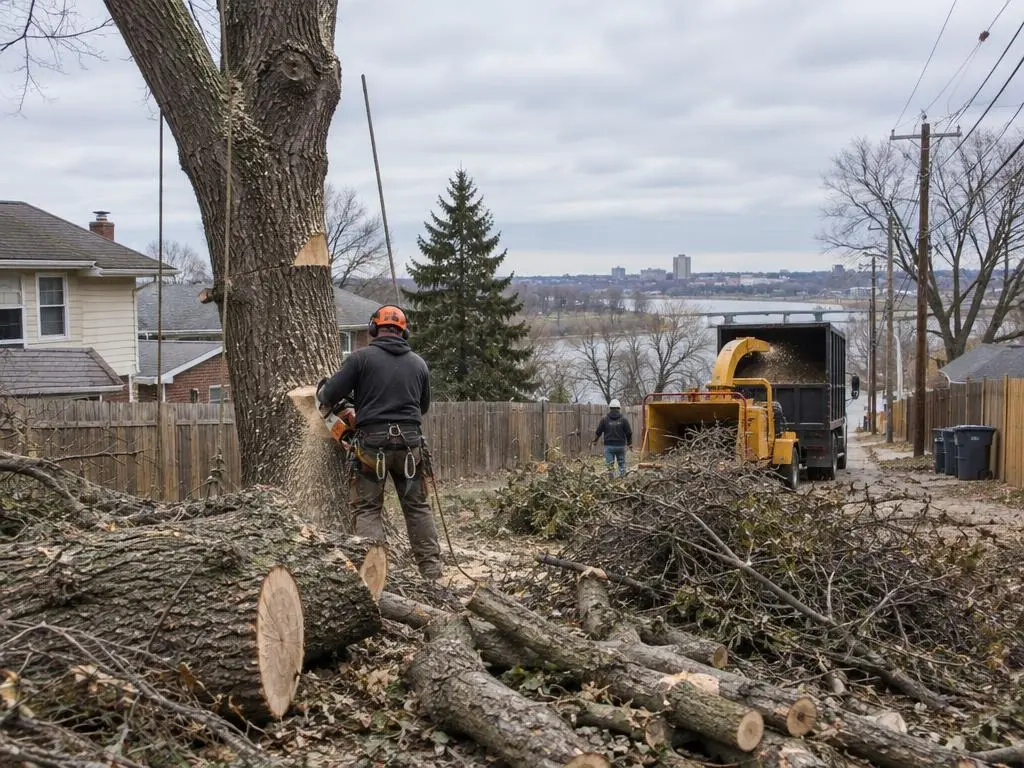
Your quote says how each tree will come down or be cut back, and what under it needs protecting.
Pines checked for wilt
We look at the needles and resin on Scots and Austrian pines and tell you if one should come out before April.
Alley and street trees sorted out
We tell you before quoting if a tree may be city property or a shared alley tree, so nothing is cut that should not be.
One price, agreed first
Each tree has its own line and price. Any change on the day is agreed with you before we go on.
Common Questions
How much does tree service cost in Wichita?
It depends on the tree's height, what it hangs over, and how easy it is to reach. HomeGuide's 2026 national figures put most tree removals between about $400 and $1,200 and most trimming jobs between about $400 and $900, with very large trees costing more. We give you a written price after seeing the tree.
Will the City of Wichita trim or remove a tree on my property?
No. The city's Parks and Recreation FAQ says it does not work on trees on private property. For trees in an alley, each neighboring owner is responsible for the vegetation on their half. If you think a tree is in the public right-of-way, call the city's Forestry office at 316-268-4003 before anyone cuts it.
Who picks up branches after a windstorm in Wichita?
The property owner, in most cases. The city says private debris is the owner's responsibility, though after a widespread disaster it may announce a pickup for a set time and area. Brooks Landfill in Wichita accepts tree debris for a per-ton fee, and our quotes say up front whether we haul the brush away.
My pine tree turned brown in the fall. Is it pine wilt?
It may be, especially on a Scots or Austrian pine. K-State says pine wilt symptoms usually show from August through December, with needles turning gray-green, then yellow and brown while staying attached, and cut branches giving off little resin. Infected trees should be removed to ground level and the wood burned, buried or chipped before April 1.
Can I burn tree limbs in Wichita?
Only with a Wichita Fire Department burn permit, and only trees, wood and vegetation from that site. The permit rules require 250 feet of clearance from property lines, buildings and roads unless the department approves otherwise, and no burning in winds over 15 mph, so it rarely works on a city lot. Chipping or hauling is the usual answer.
When is the right time for tree trimming in Wichita?
Late winter, while most trees are dormant, works well for shade trees: you can see the branch structure and the cuts have spring to start closing. For oaks, K-State advises avoiding pruning in late spring, when fresh wounds can attract the beetles that spread oak wilt. Storm-damaged or cracked limbs over a house should not wait for any season.
What should I check before hiring a tree company near me?
Ask for a written quote that lists each tree, the cleanup and whether the stump is included. Ask for a certificate of liability insurance and workers' compensation coverage sent by the insurer. If the question is whether a tree is healthy or safe, ask whether an ISA Certified Arborist will look at it; you can check that credential on the International Society of Arboriculture website.
Our Tree Services
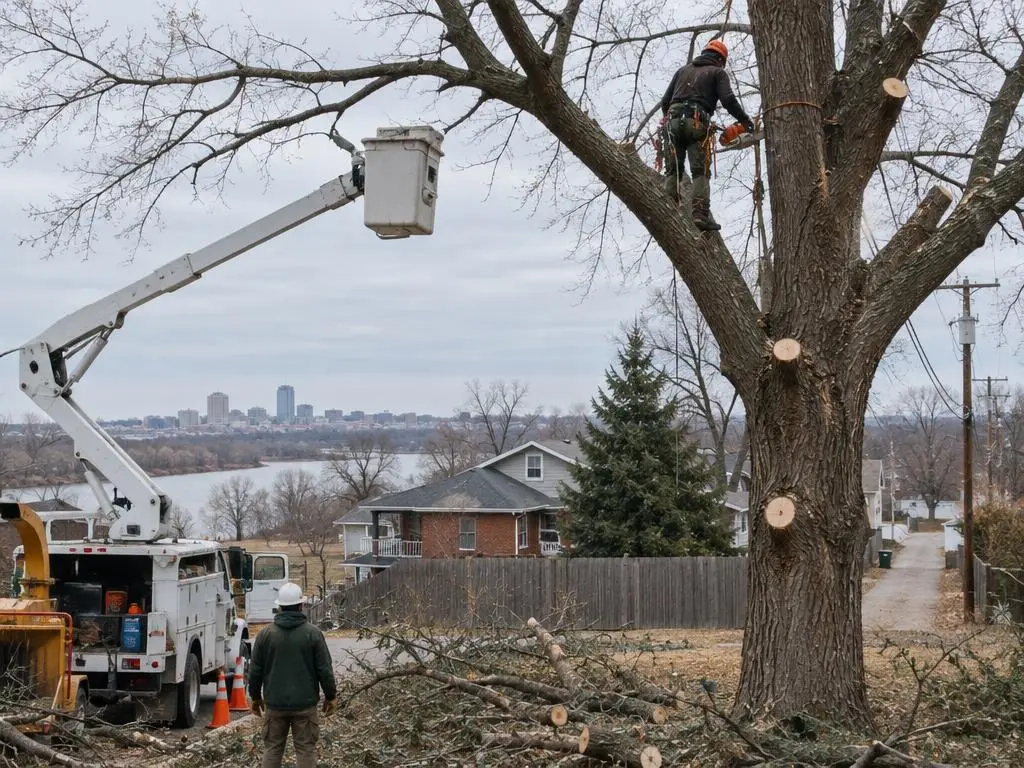
These six services cover most of what Wichita yards need, from one storm-cracked limb to a row of dying pines.
Tree Removal
Dead, split, leaning and oversized trees taken down in pieces, with the logs, brush and stump handled the way you choose.
Learn more →Tree Trimming & Pruning
Deadwood out, heavy limbs shortened and roofs cleared, with cuts made to ANSI A300 pruning standards.
Learn more →Stump Grinding
Stumps ground below the surface so you can mow, plant or lay sod, and so elms and hackberries stop sprouting back.
Learn more →Emergency Storm Tree Service
Trees and limbs brought down by wind, hail and ice cleared from roofs, driveways and yards, starting with the dangerous ones.
Learn more →Pine Wilt Tree Removal
Scots and Austrian pines killed by pine wilt cut to the ground and the wood chipped or hauled before the April 1 deadline.
Learn more →Cedar Tree Removal
Overgrown eastern redcedars and junipers cleared from yards, fence lines and old windbreaks, with the stumps flush-cut or ground.
Learn more →Book a Free On-Site Estimate
Free on-site estimates in Wichita and across Sedgwick County.